
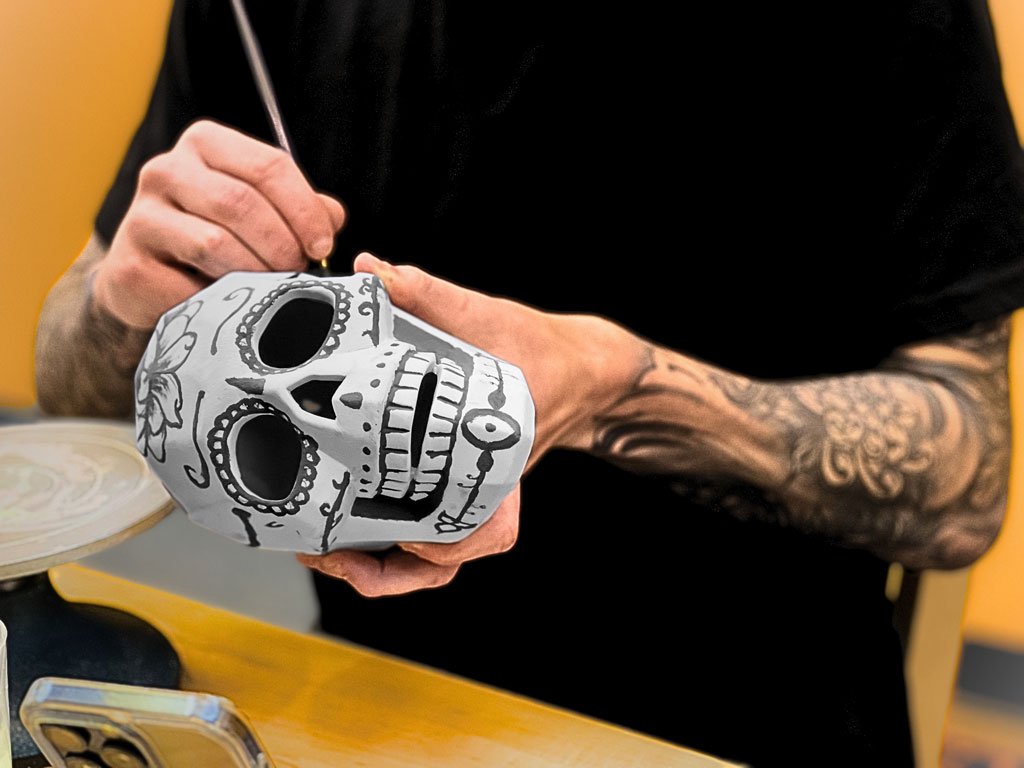
Pottery painting, wheel throwing, and handbuilding are three separate studio activities, and most comparison guides only cover two of them. Pottery painting means decorating a pre-fired bisque piece with glaze: no clay skills required, finished in one visit. Wheel throwing shapes wet clay on a spinning wheel and takes real practice to master. Handbuilding shapes clay by hand using pinch, coil, or slab methods, with no wheel, and any shape is possible. At Manna Pottery in Sterling, VA, you can try all three under one roof. Below is the full three-way breakdown, including cost, time, and firing requirements.
Key Takeaways
Pottery painting needs zero clay skill and one kiln firing; wheel throwing and handbuilding both start from raw clay and need two.
Bisque firing runs cone 06-04 (~1,830-1,945°F); glaze firing runs hotter, cone 5-11 (~2,170-2,390°F), per Bellevue College.
Wheel throwing has the steepest learning curve of the three; handbuilding is the most forgiving way to get creative control over shape.
Quick Comparison: Pottery Painting vs. Wheel Throwing vs. Handbuilding
|
Feature |
Pottery Painting |
Wheel Throwing |
Handbuilding |
|
Starts from |
Pre-made bisque piece |
Raw clay |
Raw clay |
|
Skill needed |
None |
High, steep learning curve |
Low to moderate |
|
Shapes possible |
Fixed (pre-made) |
Round / symmetrical only |
Any shape |
|
Session length |
30-90 min |
1-2 hrs, plus practice sessions |
1-2 hrs per session |
|
Typical starting cost |
~$25 per piece |
~$60 per class |
~$75 per session (materials incl.) |
|
Good for kids |
Yes |
Not usually |
Yes |
Cost figures reflect typical single-session pricing reported by Pottery Crafters; actual studio pricing varies by location.
What Is Pottery Painting?
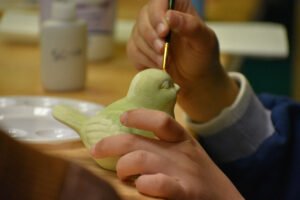
Pottery painting is the easiest entry point into ceramics because someone else already shaped the piece. You pick a pre-fired bisque item (a mug, bowl, plate, or figurine) and paint it with underglaze or glaze. The studio fires it in a kiln afterward, and you pick up the finished piece about a week later.
Skill level: None required, suited to kids, first dates, and groups
Time: 30-90 minutes in-studio, plus about a week for the studio’s glaze firing
What you control: Color and design only, not the shape
Best for: Casual visits, gifts, birthday parties
Walk-ins are welcome for pottery painting at Manna Pottery’s studio in Sterling, VA. No appointment needed, and no experience required.
What Is Wheel Throwing?
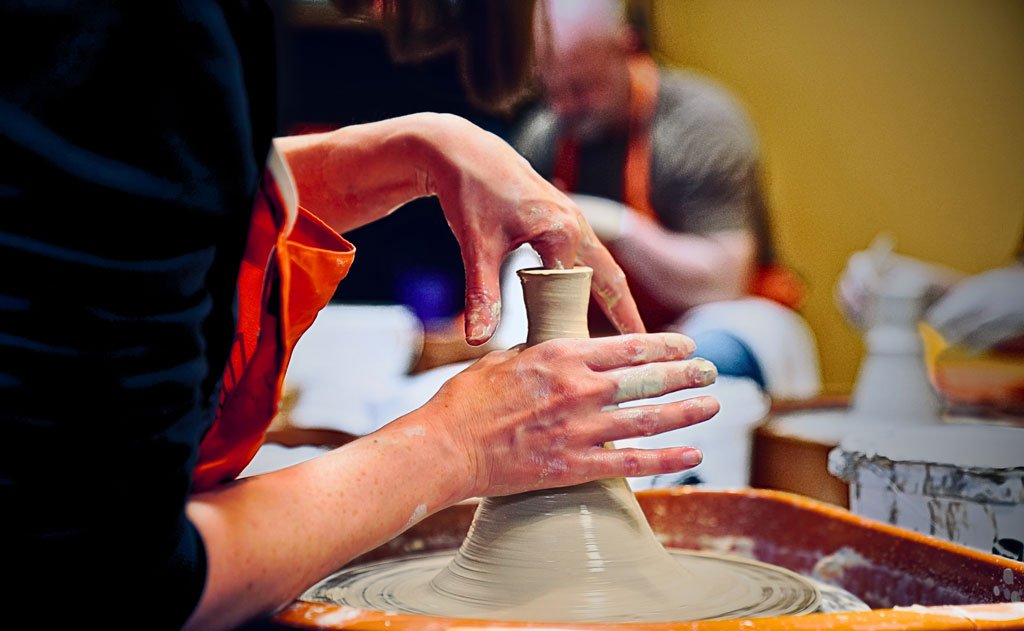
Wheel throwing is what most people picture when they hear “pottery”: hands shaping spinning clay into a bowl or vase. It’s the hardest of the three to learn because centering the clay alone takes most beginners several tries before it clicks. Once centered, you pull the walls up to form the piece, trim it once leather-hard, then send it through two separate kiln firings.
Skill level: Steep learning curve, expect lopsided first pieces
Time: A single piece takes a full class session to throw; drying and two firings add roughly 1-3 weeks
What you control: Full shape, symmetry, size (round forms only)
Best for: Anyone who wants a real hands-on craft skill and doesn’t mind failing a few times first
Manna Pottery’s workshops covers centering, throwing “off the hump,” and trimming: the core skills behind every wheel-thrown piece.
What Is Handbuilding?
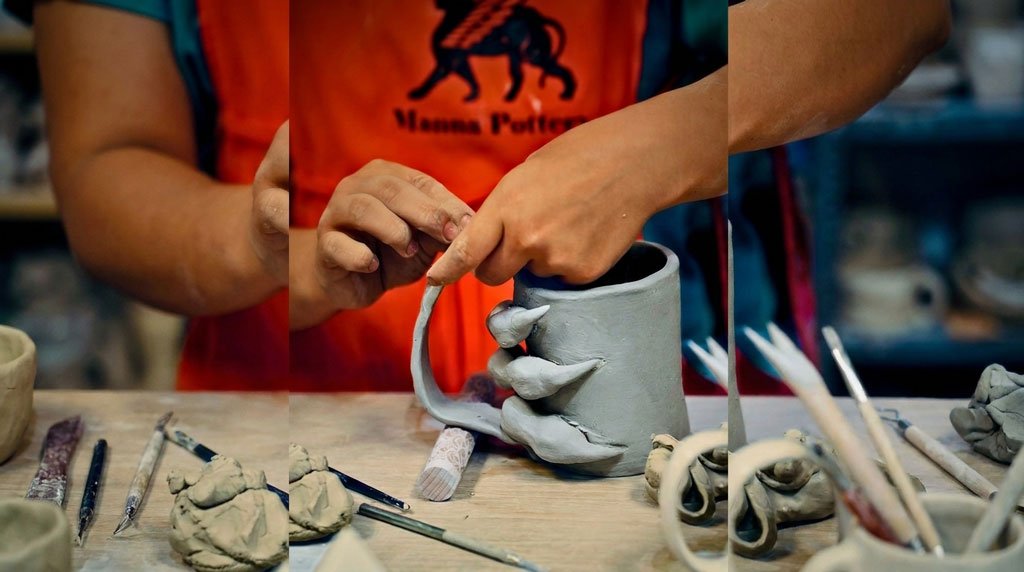
Handbuilding shapes clay using your hands and simple tools instead of a wheel. Three core techniques cover most of it: pinch (squeezing a ball of clay into a bowl shape), coil (stacking and blending rolled clay ropes), and slab (cutting and joining flat sheets of clay). It’s slower-paced than the wheel and far more forgiving of mistakes.
Skill level: Beginner-friendly, though clean joins take practice
Time: One to several sessions depending on complexity; drying and firing can add up to 3+ weeks for larger pieces
What you control: Any shape, square, organic, sculptural, asymmetrical
Best for: Anyone who wants creative freedom over form without the wheel’s learning curve
Handbuilding workshops run alongside wheel classes at Manna Pottery. See the full class and workshop schedule for current sessions.
Firing Requirements: What Happens After You Leave the Studio
All three techniques rely on kiln firing, but at different stages. Bisque firing, the first firing that hardens raw clay, runs at cone 06-04, roughly 1,830-1,945°F, according to Bellevue College’s ceramics reference chart. Glaze firing runs hotter: mid-fire glazes fire around cone 5-6 (roughly 2,170-2,230°F), while high-fire glazes reach cone 9-11 (roughly 2,336-2,390°F), per The Ceramic School’s firing guide.
Pottery painting only involves one firing, the glaze firing, since the piece was bisque-fired before you arrived. Wheel throwing and handbuilding both go through the full two-stage cycle: bisque fire, then glaze fire, which is why those pieces take longer to get back.
Which One Should You Try First?
Pottery painting suits a fun, no-skill activity for a date night, birthday party, or family outing. Wheel throwing rewards anyone who wants to learn a genuine hands-on craft and doesn’t mind a few wobbly early attempts. For creative control over shape without the wheel’s steep learning curve, handbuilding is the better starting point. Not sure which fits your group? Reach out to Manna Pottery and staff can point you to the right session.
Frequently Asked Questions
Is wheel throwing harder than handbuilding?
Yes. Wheel throwing requires centering clay on a spinning wheel, a skill that typically takes several sessions to learn. Handbuilding uses hand techniques like pinch and coil, which beginners can produce usable results with on the first try.
Can beginners do wheel throwing?
Yes, beginners can try wheel throwing, but expect lopsided first pieces. Most studios offer beginner wheel classes that focus on centering and basic pulls before shaping full forms.
What’s the difference between pottery painting and ceramics classes?
Pottery painting decorates an already-shaped, pre-fired piece with glaze in a single visit. Ceramics classes (wheel throwing or handbuilding) teach you to shape the clay itself from scratch, and involve a full bisque-then-glaze firing cycle.
Which is best for kids?
Pottery painting and handbuilding both work well for kids since neither requires wheel coordination. Wheel throwing is possible for older kids and teens but usually needs closer instructor supervision.
Do all three require a kiln?
Yes. Wheel throwing and handbuilding both need a full bisque-then-glaze firing cycle since they start from raw clay. Pottery painting needs one glaze firing, since the piece was already bisque-fired before you painted it.
How much does each activity typically cost?
Pottery painting runs around $25 per piece, wheel throwing around $60 per class, and handbuilding around $75 per session with materials included, according to cost comparisons from Pottery Crafters. Exact pricing varies by studio and location. Check current rates and book a session at Manna Pottery.
Before your first class, read what to wear to a pottery class, see the skills you gain from pottery classes, pick up ceramic painting tips, browse pottery painting ideas, and meet our teachers.
Where is Manna Pottery located and what are the hours?
Manna Pottery is located at 36 Pidgeon Hill Dr, Sterling, VA, and is open Monday-Friday 11am-6pm and Saturday-Sunday 11am-7pm. Walk-ins are welcome for pottery painting; wheel throwing and handbuilding workshops can be booked through the online booking page.



One Response