
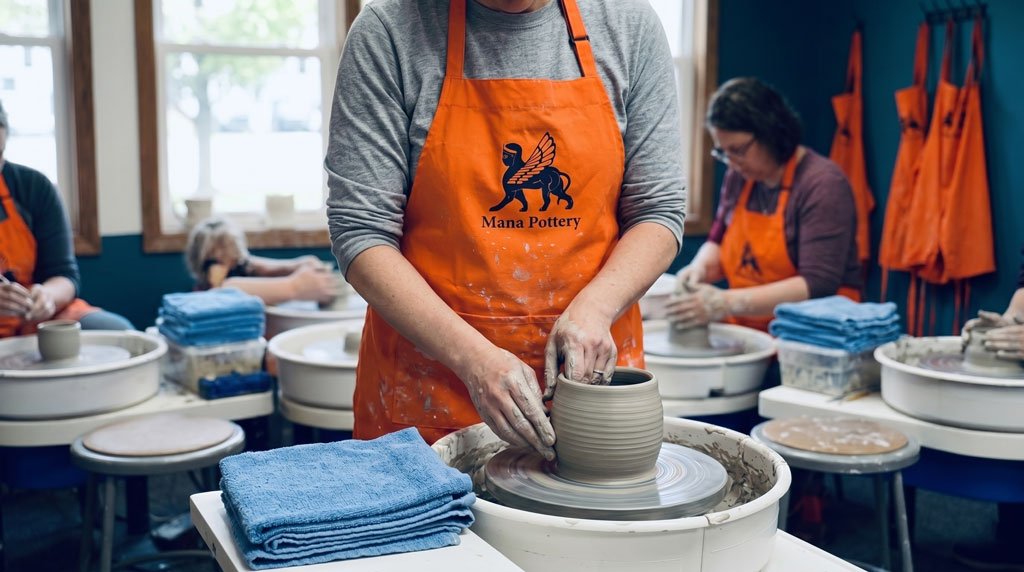
Every week at Manna Pottery, someone walks in for their first session dressed beautifully — nice top, favorite jeans, the earrings they save for special occasions. They’re excited, which is exactly right. The outfit, though, is about to have a rough afternoon.
Knowing what to wear to a pottery class doesn’t have to be complicated. The short answer fits in one sentence: dress like you’re about to paint a room or pull weeds in the garden. But there are a few specifics worth knowing, especially if you’re doing paint-your-own pottery versus throwing clay on the wheel. Those two experiences are messier in very different ways, and most guides don’t make that distinction.
Key Takeaways
Wear old, comfortable clothes you don’t mind staining — clay and glaze both wash out, but it’s smarter not to test that with your best shirt. Closed-toe shoes are a must; skip the sandals, heels, or anything slippery. Paint-your-own pottery is far less messy than wheel throwing — but glaze on fabric can still leave a mark. Remove rings, bracelets, and watches before you start. They collect clay and can scratch your work. Manna Pottery provides aprons, so you don’t need to bring one.
The Short Answer: Dress Like You’re About to Garden or Paint a Room
For a pottery class, the ideal outfit is comfortable, old, and expendable. You want clothes that let you move freely — leaning forward over a wheel or reaching across a table to paint a ceramic piece takes more range of motion than most people expect. Tight jeans, structured blazers, and fitted dresses all work against you here.
Think: your most comfortable worn-in jeans or joggers, a soft cotton t-shirt, flat closed-toe shoes, and nothing dangling from your wrists or fingers. That’s the full formula.
The “old clothes” rule isn’t about being dramatic. Red clay in particular can stain fabrics permanently if it sets in. Most clay washes right out with cold water before it dries, but if you’re focused on a piece and forget about the smear on your sleeve until you get home, you may lose that shirt. We’ve seen it happen. Come in wearing something you’d be fine losing, and you can focus entirely on making something.
What to Wear on Top
The best top for a pottery class is a short-sleeved or fitted long-sleeved cotton shirt. Loose, flowing sleeves are the main thing to avoid. When you’re working at a pottery wheel, your forearms are in constant contact with spinning clay. A dragging sleeve disrupts the clay, creates a mess, and breaks your concentration at exactly the wrong moment.
If you love long sleeves, roll them firmly above the elbow before you start. The key word is “firmly” — sleeves that unroll mid-session are genuinely frustrating.
Cotton is the right fabric choice because it doesn’t hold static that attracts clay dust, and it washes clean more reliably than synthetics. Skip the silk, skip the wool, and leave the linen for the farmers market. Old cotton t-shirts are the unofficial uniform of every pottery studio I’ve ever worked in, from Northern Virginia to studios in Europe and the Middle East.
From the studio: The guests who have the best time are the ones who come in relaxed about their clothes. When you’re not worried about a splatter, you stay in the creative zone longer. That’s when the good work happens.
What to Wear on the Bottom
Comfortable pants are the goal. Loose-fitting jeans, joggers, leggings, or soft cotton trousers all work well. The main concern is mobility: you’ll be sitting, leaning, and sometimes kneeling to check the shape of a piece from a different angle.
Tight, rigid jeans make wheel throwing uncomfortable. At the wheel, you sit with your knees apart and your elbows pressed inward, and anything that fights that position makes centering the clay harder than it needs to be.
Shorts are fine, especially in warmer months. You might get a bit of clay on your legs, but it wipes off easily. A few guests look alarmed by this until they realize it’s just wet earth — and then they stop caring completely.
Skirts aren’t ideal if you’re doing wheel throwing. They make it hard to get into the right seated position, and if the skirt is full, it can get caught in the wheel. For paint-your-own pottery sessions, skirts are perfectly fine since you’re seated at a table and not working with a spinning wheel.
What About Footwear?
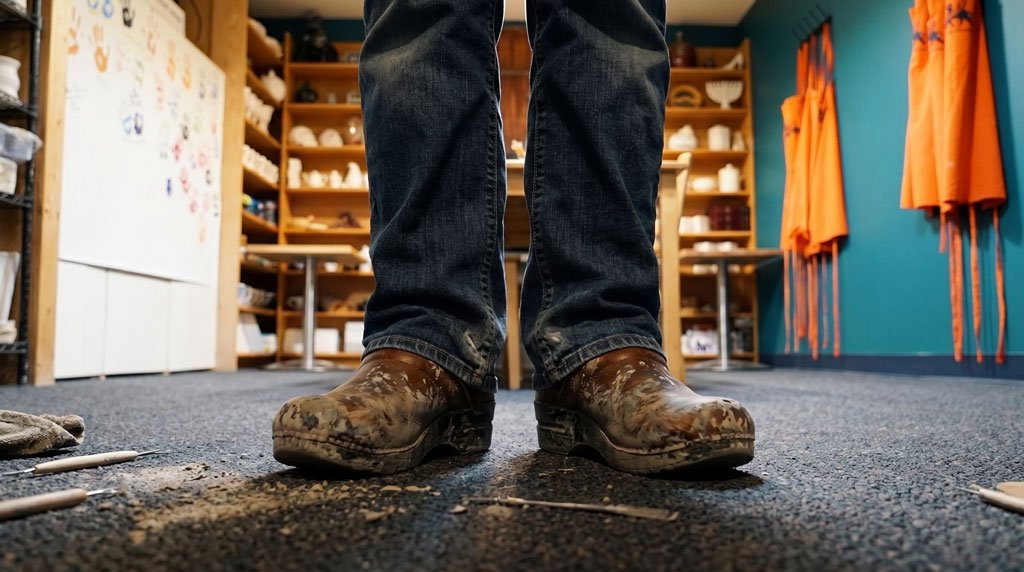
Closed-toe shoes are the one non-negotiable. Pottery studios are active workplaces: there are tools on shelves, bisque pieces on tables, and occasionally a wet floor near the sink. A dropped piece or a slipped tool can cause a real injury if your feet aren’t protected.
Beyond closure, look for shoes with flat soles that don’t slip. Flip flops, heels, platform shoes, and anything with a sole that’s been worn smooth are all poor choices. Sneakers, canvas shoes, or old flats work well. If you have a dedicated pair of “studio shoes” — shoes you don’t mind getting clay-dusted — even better, because you won’t have to worry about tracking clay into your car or home.
If you’ve already booked a wheel throwing workshop at Manna Pottery, your feet will be close to the wheel pedal for most of the session, so flat-soled shoes also give you better feel and control.
Jewelry, Nails, and Hair: What Instructors Actually See
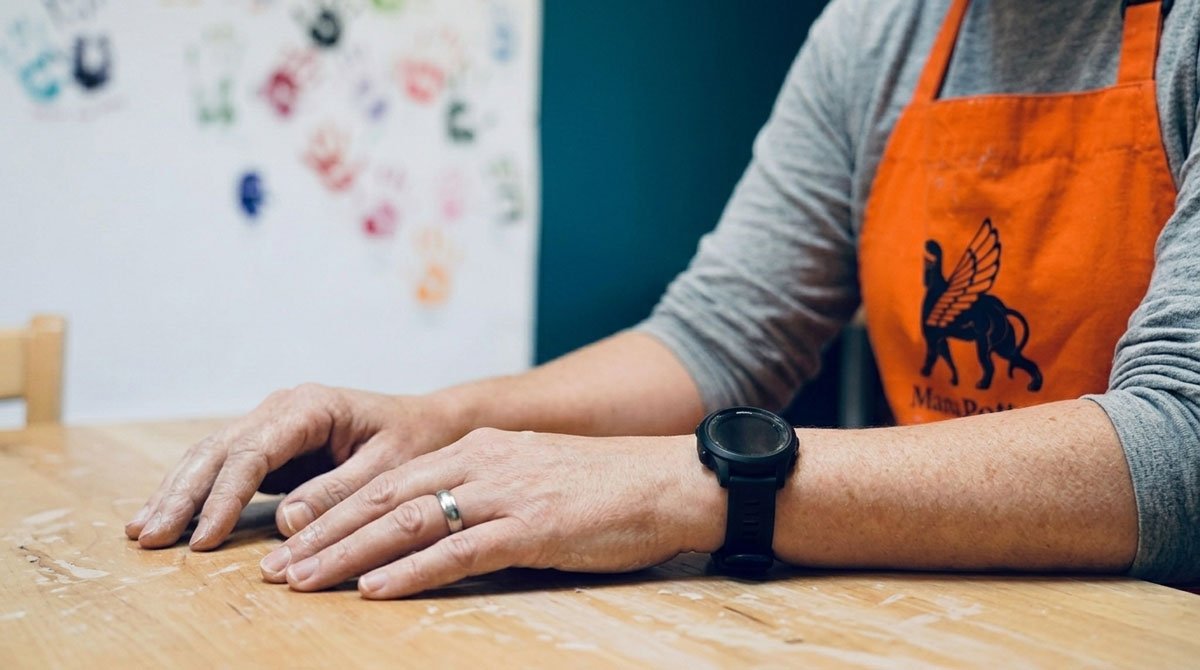
Jewelry: Remove rings, bracelets, and watches before class. This isn’t just about protecting the jewelry. Rings leave imprints in soft clay that can ruin a piece at the shaping stage, and the grit in some clays will scratch softer metals over time. A wide-band ring in iron-bearing clay is a rough combination. Leave jewelry in your bag or pocket before you sit down.
Stud earrings and simple necklaces are fine. Anything that dangles becomes a problem when you’re leaning forward to work.
Nails: Short nails make pottery significantly easier. Long nails dig into clay unexpectedly while centering, which breaks the rhythm and can collapse a piece. That said, plenty of guests with longer nails have produced beautiful work in our studio. You adapt your technique, use tools more, and handle the clay with an adjusted touch. It’s not a dealbreaker. Just something to know going in.
Hair: Tie it back. This applies regardless of length. Hair falling forward into wet clay is the kind of thing that sounds funny and feels maddening. A hair tie, a bun, a braid, a hat — all good. Keep it out of your workspace.
Paint-Your-Own Pottery vs. Clay Classes: Does It Change What You Wear?
Yes, and it’s worth understanding before you book.
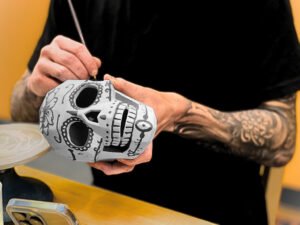
In a paint-your-own pottery session, you’re working with bisque pieces that are already dried and fired once. The clay is completely set. You choose from over 200 pre-made forms — mugs, bowls, plates, ornaments, figurines — and paint them with water-based ceramic glazes. The mess level is much closer to watercolor painting than to muddy clay work. You’re unlikely to get anything on your clothes at all if you’re reasonably careful. An apron covers any splashes.
At a paint-your-own pottery session at Manna Pottery, you can honestly come in clothes you’d wear to dinner without much risk. Most guests do exactly that.
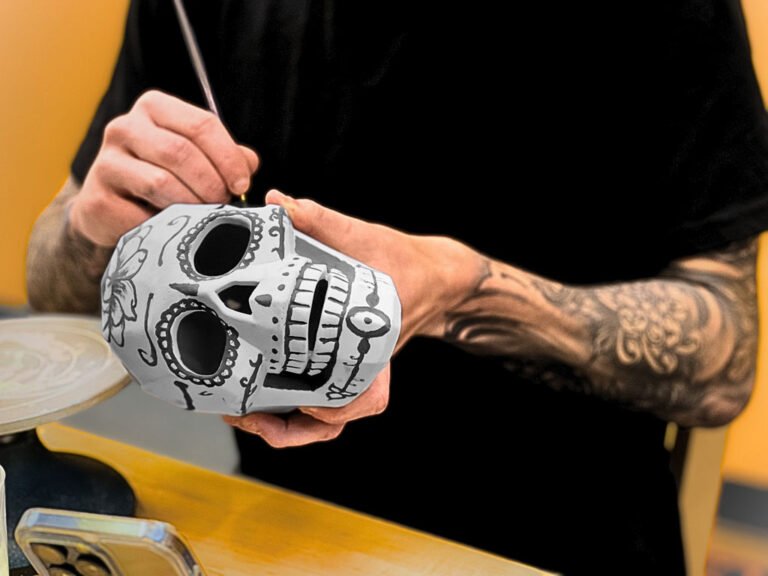
Paint Your Own Pottery
Pick Your Piece Choose from a variety of figures and functional shapes. We offer many…
Wheel throwing and handbuilding workshops are a different story. You’re working with raw, wet clay. Centering alone involves pressing your whole body’s weight through your hands and forearms into a spinning mass of clay. Water sprays. Clay flicks. Hands go in wet and come out covered. The apron protects your front, but your sleeves and thighs will likely see some clay before the session ends.
For our hand building workshop (slabs, coils, pinch pots), the mess falls somewhere in between — more contact than PYOP, but less splatter than the wheel.
When in doubt, dress for the messier experience. It costs nothing to be prepared, and it lets you engage fully without holding back.
What Manna Pottery Provides (So You’re Not Starting From Scratch)
A few things guests sometimes stress about that you don’t need to bring:
Aprons: We provide aprons for all sessions. Our aprons are well-maintained and cover you from chest to mid-thigh. For wheel throwing, they cover your lap and thighs, which is where most of the splash hits. You’re welcome to bring your own if you have a preferred studio apron, but it’s not necessary.
Tools: All clay tools, brushes, glazes, and painting supplies are included in your session. Nothing to bring on the craft side.
Hand towels and sink access: We have wash stations throughout the studio for rinsing hands during the session. Bring your own small hand towel if you like having one nearby — this is a nice-to-have for wheel work in particular, since you’re constantly wiping your hands as you throw.
The one thing worth considering bringing: a change of top if you have plans right after a wheel session and want to freshen up. It’s not required, but a few guests appreciate having the option.
We’re at 36 Pidgeon Hill Dr in Sterling, VA, open seven days a week — Monday through Friday 11am to 6pm, weekends until 7pm. Walk-ins are welcome for paint-your-own sessions. Workshops are bookable online.
Quick Reference: Pottery Class Outfit Checklist
Wear:
Old cotton t-shirt or short-sleeved top
Comfortable pants: joggers, worn jeans, leggings, or soft trousers
Closed-toe, flat-soled shoes (sneakers, canvas flats)
Hair tied back
Skip:
Rings, bracelets, watches, dangling earrings
Loose or flowing sleeves
Sandals, flip flops, heels
Anything white or dry-clean-only
Your favorite outfit
Nice to have:
Extra top if you have plans after a wheel session
Your own small hand towel (for wheel work)
FAQ
Does clay wash out of clothes?
Most clay washes out of fabric if you rinse it in cold water before it dries. The key is speed. Wet clay is water-soluble and comes out easily. Dried clay can still be removed in most cases by soaking in cold water and laundering normally. Red and iron-rich clays are harder to remove from white or light-colored fabrics, which is why “no whites” is the standard studio advice.
Is paint-your-own pottery messy?
Paint-your-own pottery is much less messy than wheel throwing or handbuilding. You’re painting pre-fired bisque pieces with water-based ceramic glaze, so there’s no wet clay involved. The glaze is pigmented and can leave a mark if it soaks into fabric, but most splashes wipe off easily. An apron handles the rest. Most guests who come for a pottery painting session leave with perfectly clean clothes.
Can you do pottery with long nails?
You can, though it takes some adaptation. Long nails tend to dig into clay while centering and pulling up walls on the wheel, which interrupts the process. With adjusted technique and more reliance on tools, most people manage fine. Handbuilding and paint-your-own pottery are generally easier with longer nails than wheel work is.
Should I bring my own apron?
No need at Manna Pottery — we provide aprons for all sessions. If you have a split-leg pottery apron you love and prefer using your own, you’re welcome to bring it. Split-leg aprons (the kind designed specifically for wheel work) give better thigh coverage than standard kitchen aprons. But they’re not required here.
What should I bring to a pottery class for the first time?
Your main job is to show up in appropriate clothing. Beyond that, bring nothing essential — tools, glazes, aprons, and workspace are all provided. A small hand towel is a nice addition for wheel sessions. If you have plans right after and want a fresh top, tuck one into your bag. That covers it.
Pottery is one of those activities that asks you to show up a little imperfect. The clay doesn’t care how polished you look, and neither do we. Wear something comfortable, leave the nice jewelry at home, and bring whatever energy you have.
Want to know more before you book? Compare pottery painting vs. wheel throwing vs. handbuilding, see the skills you gain from pottery classes, pick up ceramic painting tips, browse pottery painting ideas, or check our FAQ.
If you’ve been thinking about trying a class, our kids and teens workshops, wheel throwing sessions, and walk-in painting are all running now. You can find us at 36 Pidgeon Hill Dr in Sterling — just off Cascades Parkway in the Potomac Falls area. Come as you are.



3 Responses